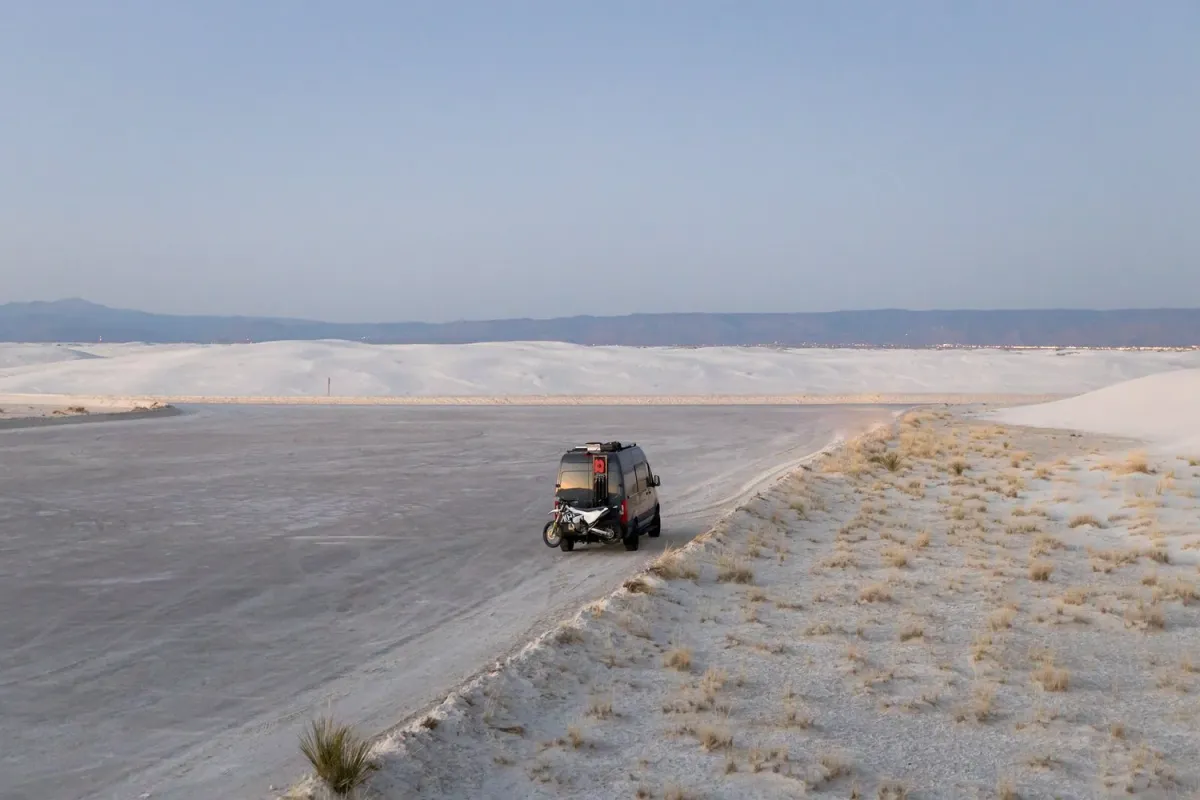
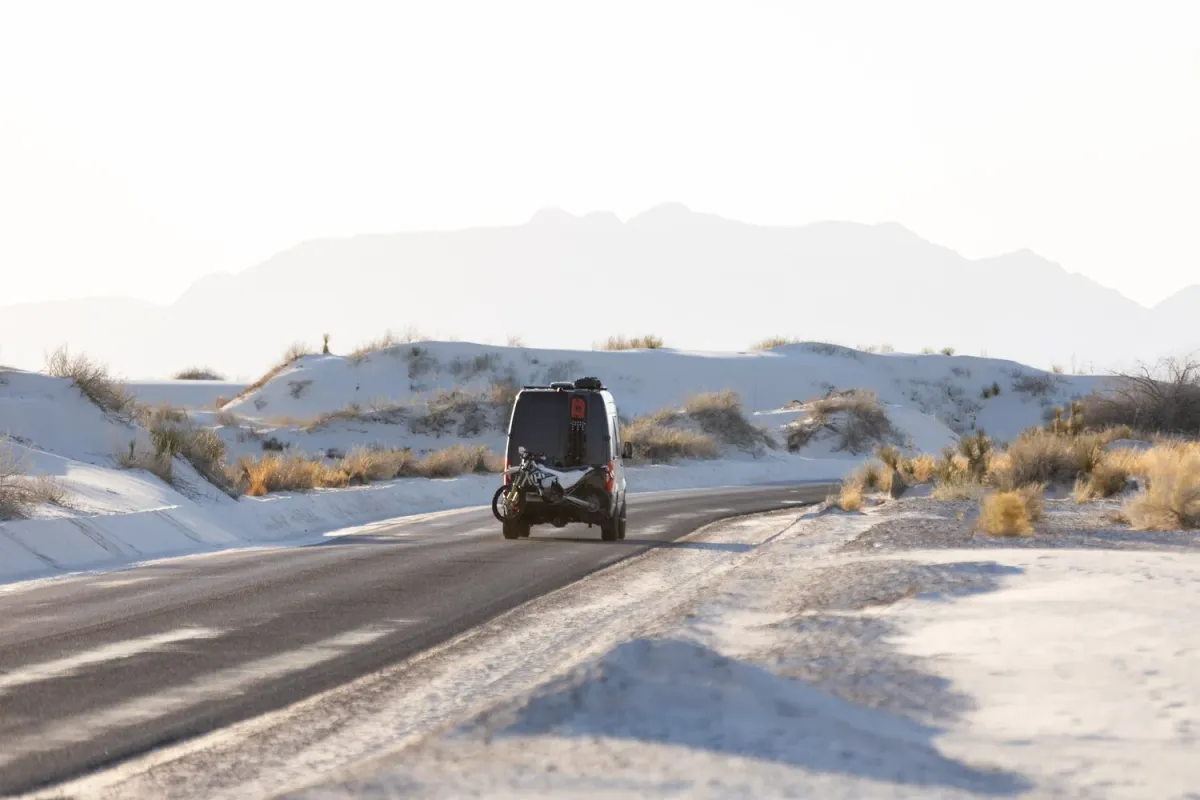
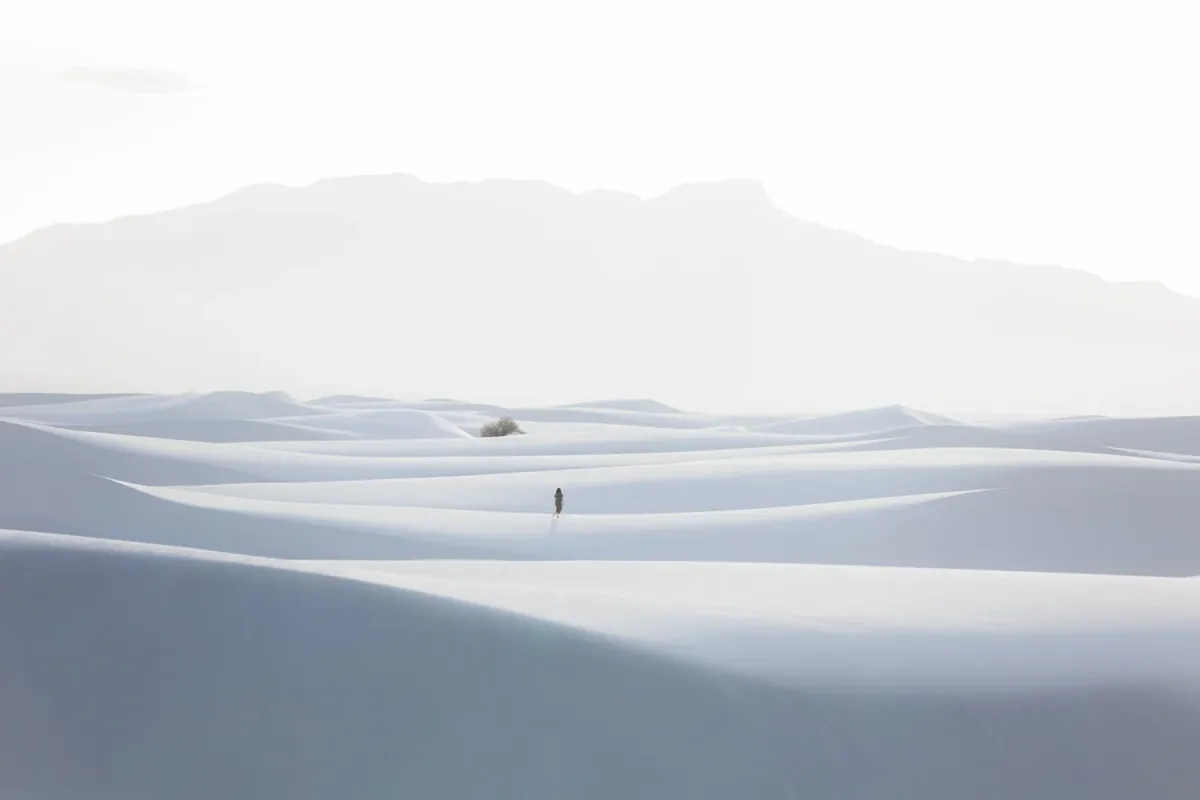
“Rising from the heart of the Tularosa Basin is one of the world’s great natural wonders – the glistening white sands of New Mexico. Great wave-like dunes of gypsum sand have engulfed 275 square miles of desert, creating the world’s largest gypsum dune field.”
National Park Service
Why White Sands
When the Permian Sea retreated millions of years ago, it left behind deep layers of gypsum. Later, water from melting glaciers dissolved the mineral and returned it to the basin. Today, rain and snow continue the process. Wind and water break down the crystals, making them smaller and smaller until they are sand. Steady, strong southwest winds keep the gypsum sand moving, piling it up and pushing the dunes into various shapes and sizes.
Exploring the dunes
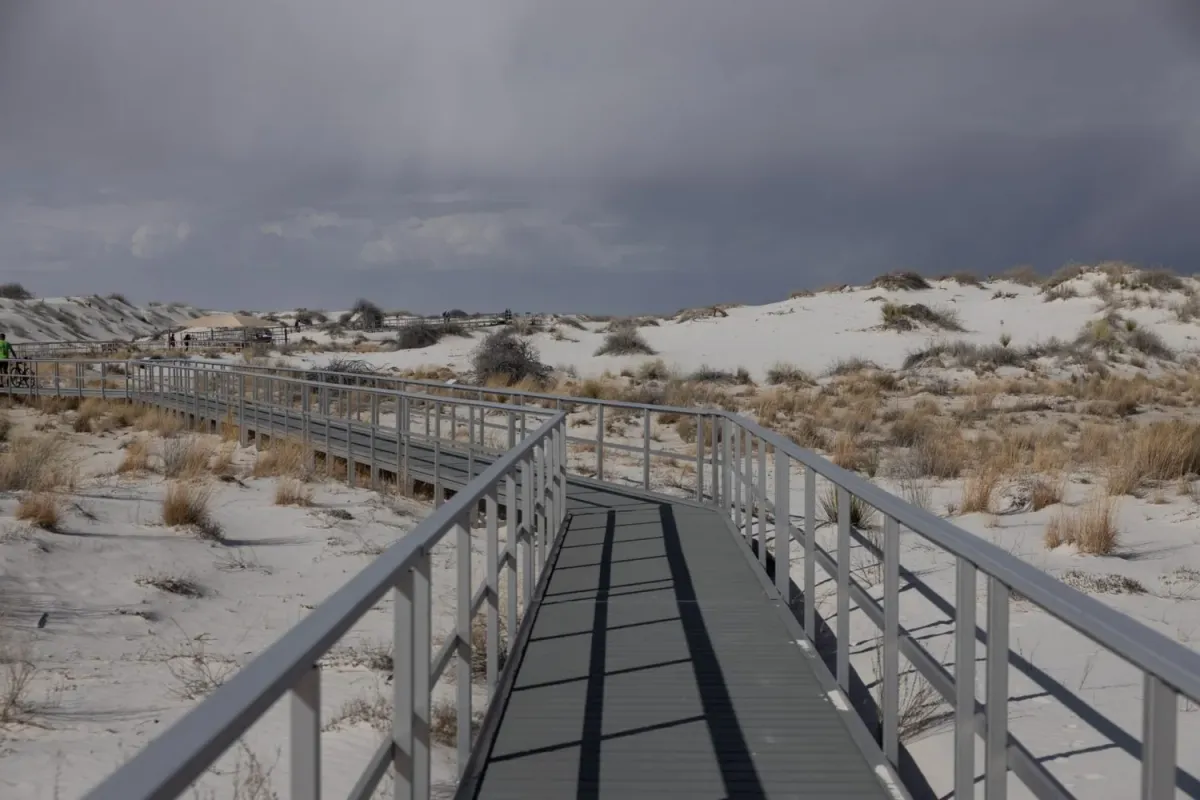
The drive into and around the dunes is 16 miles, starting as a paved road and eventually leading into hard-packed sand. The park has many large parking lots where you can set out into the dunes, and a few walkways with plaques describing the history of the area.
But the best way to explore the dunes is to start at one of the main trailheads and just wander. Another great option is to head out to a dune and have a picnic.
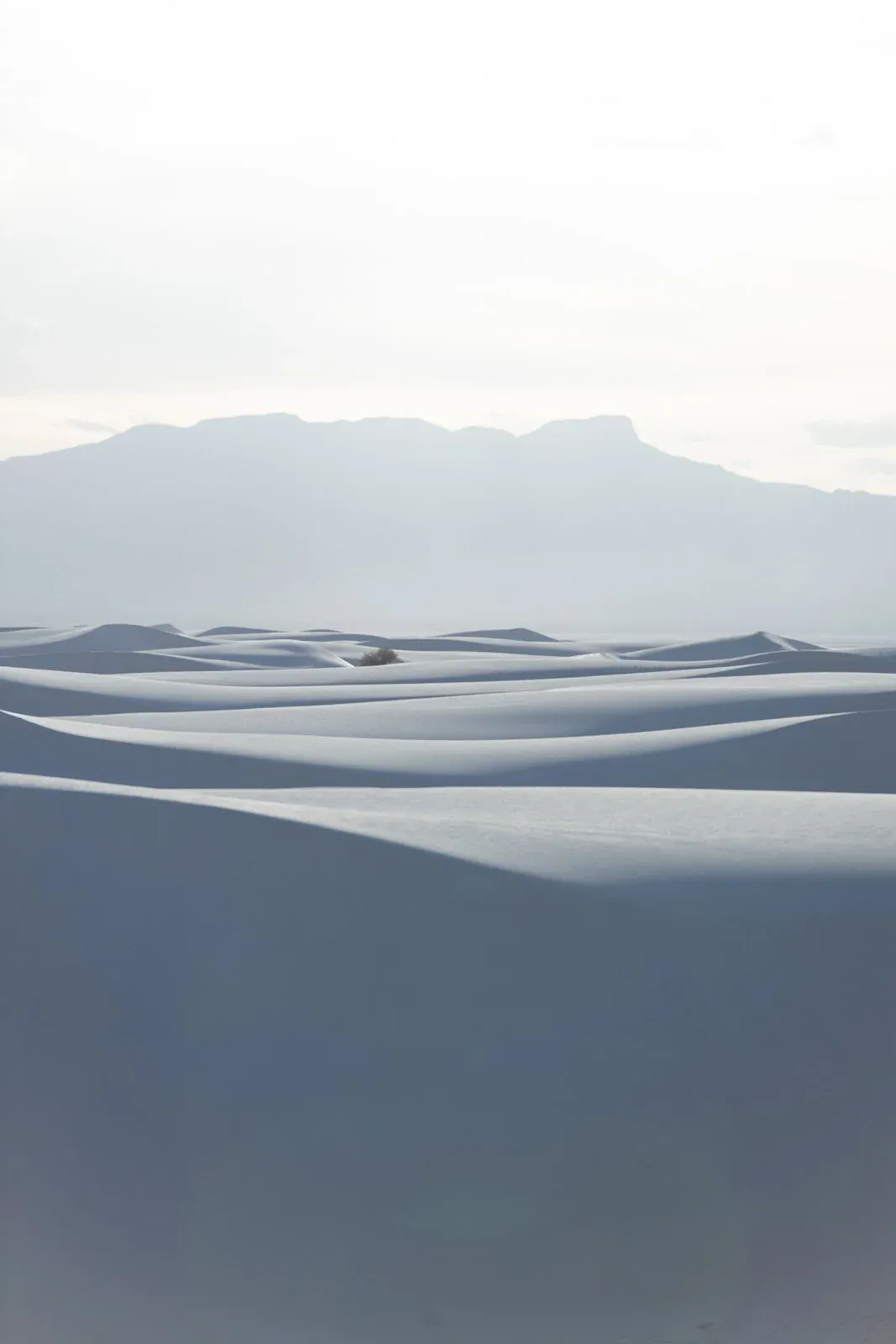
The textures in the sand vary throughout the dunes as well, from soft sand to harder crystallized parts between the dunes. As the sun starts to set, the colors really start to come alive on the horizon.

“The park started to empty in anticipation of the rain. We decided to stay, which created some of the most stunning views we saw that week.”
On one of the days exploring we noticed a storm rolling in. What followed was rainbows and cotton candy skies, before and after the storm.